

This is one of the most common questions put to RoseEdu by international school owners.
Selecting a curriculum or framework is a very important decision for your school. A school’s curriculum is a sequence of learning opportunities that shape a child’s education and learning environment. Two of the most popular international curriculum options in include the International Baccalaureate (IB) and Cambridge Curriculum. So what are you really signing up for International Baccalaureate (IB) vs Cambridge? Which one is right for your school?
Curriculum vs Framework
In the academic world there are many different theories of teaching and content to teach. Once a school has selected a framework/curriculum the teachers follow the guidelines that come with it. RoseEdu break it down as curriculum vs framework. A curriculum is developed and delivered within subject specific domains, this includes specific content and learning goals. A curriculum often has a framework attached to it. A framework is a structure that shows teachers\students how to work through information in all subjects, no specific content is provided but a guideline specific to skill building is used. Picking a curriculum or framework dictates how a student engages in their academic world and how learning will take place. The process of learning relies on how we process and understand information therefore it is essential to pick the correct curriculum for your child’s needs.
What is International Baccalaureate (IB)?
The International Baccalaureate is an education framework that covers a more diverse and global education therefore helping students understand different languages and cultures. The framework is divided into four programmes: Primary Years Programme (3-12 years old), Middle Years Programme (11-16 years old), IB Diploma (16-19 years old) and Career related (16-19 years old). The IB framework is internationally transferable, meaning that the content taught is based on international knowledge and information, hence not country specific. How does this translate to the classroom? Each child will be given the opportunity to inquire, act and reflect around a topic of interest. This allows a student to obtain a mastery of skills in a specific subject matter. The IB Diploma Programme is research-based and develops disciplinary and interdisciplinary knowledge. Its holistic approach means that students engage in thinking and discussion, alongside independent research and community service.
As stated by the IB: “at the heart of all IB programmes is the IB Learner Profile.” Each programme is designed to match the educational needs of students today and tomorrow, and to nurture the skills and attitudes they need to excel at their careers of choice and lead meaningful lives.”
What is the Cambridge Curriculum?
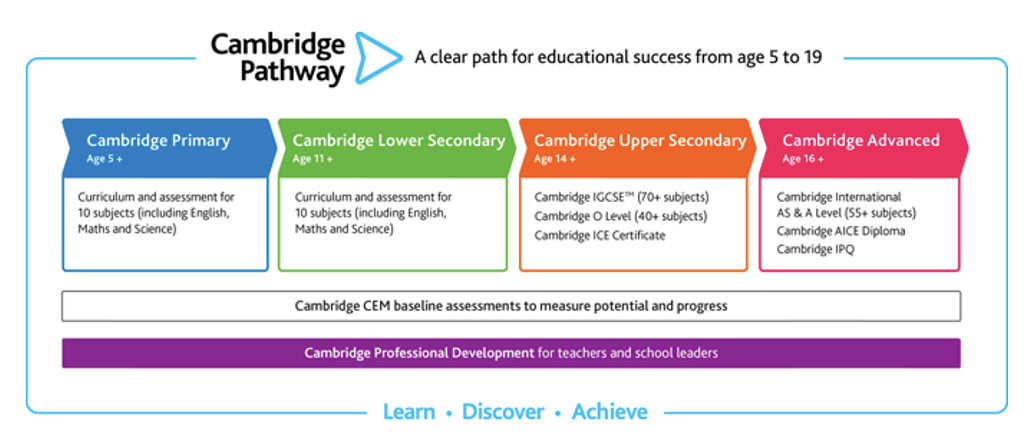
The Cambridge Curriculum has pre-defined, country-specific, very straight-forward examinations with a definite content based goal. The curriculum is divided into four phases: Cambridge Primary (5-11 years old), Cambridge Lower Secondary (11-14 years old) and Cambridge Upper Secondary (14-16 years old) and IGCSE and A Levels (16+ years old). Lately they have also introduced an Early Years programme. How does this translate to the classroom? Each teacher will have a curriculum guideline with specific content to teach. The students engage with, learn the subject matter and will be tested on the content in a prescribed examination. This exam is internationally comparable to assess a students abilities. Cambridge provides a straightforward path for making choices on where to go for a tertiary education.
Cambridge boasts “IGCSE Certificates are recognised as qualifications that prepare and equip students with the skills they need to succeed both at university and beyond. Universities tell us that they value the independent research and critical thinking skills, as well as the deep subject knowledge that our qualifications bring.”.
 International Baccalaureate (IB) vs Cambridge Similarities
The IB and Cambridge programs are both accredited education frameworks/curriculums that are globally recognised. Both programs produce students who go on to study at well known tertiary institutions. Both the IB and IGCSE show successful enrolment and outcomes at university level with marginal difference.